

 Hungarian
 Roman

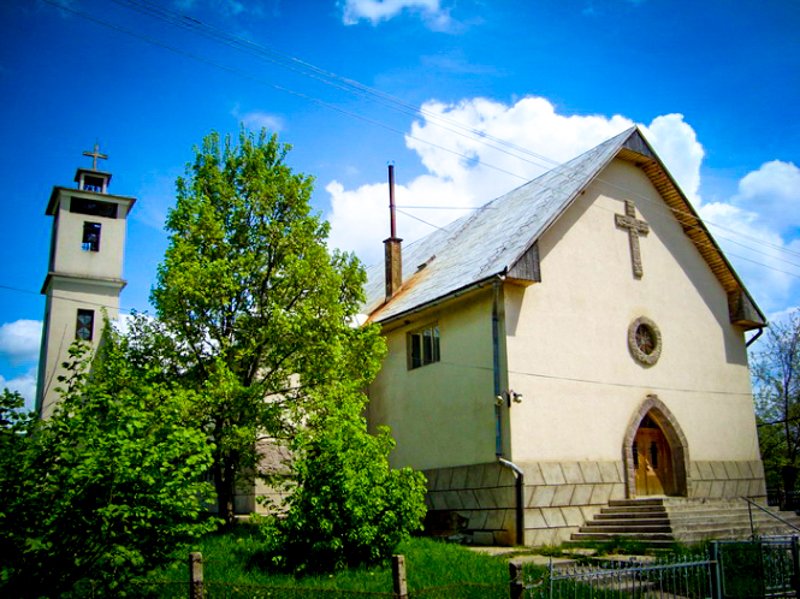
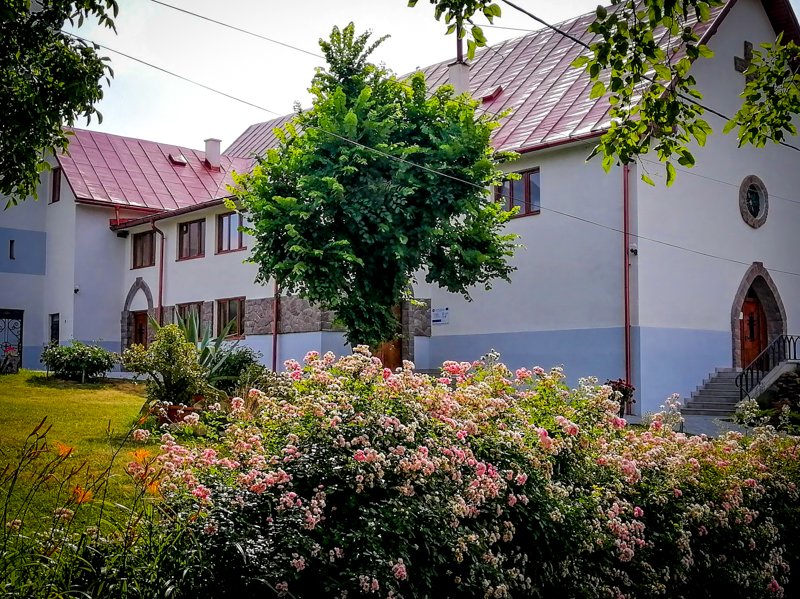
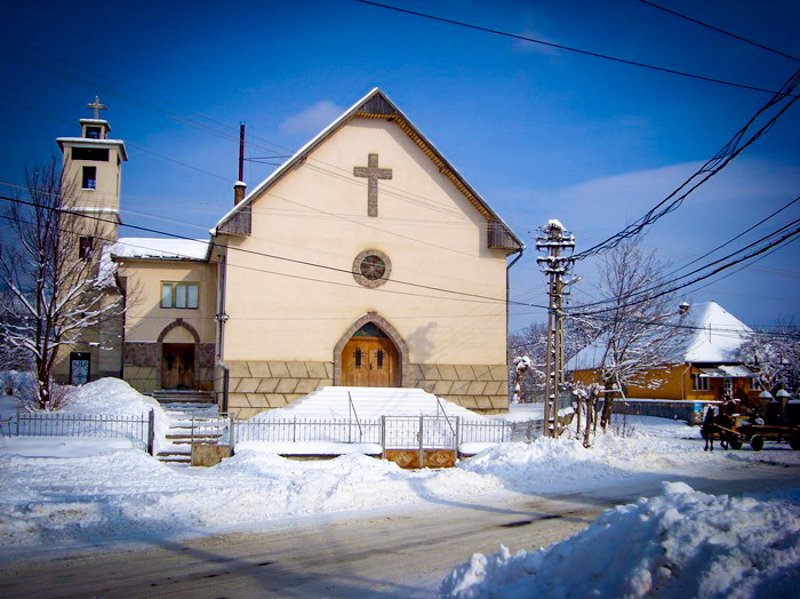
Estelnic Franciscan Church
Kezdi chair Estelnic str. Principala, Estelnic, jud. Covasna
The most valuable and oldest monument in Estelnic is the Lower Catholic Church of Estelnic. The old church was built during the time of the Árpádházi kings and, even with subsequent expansion and changes in style, remains to this day the oldest and most impressive building in the settlement.
The church dedicated to the protection of St. Simon and the apostles Júdás-Tádé is one of the fortress churches in Secuime. According to the tithe list of 1332, the parish priest named János contributed 16 banals to the maintenance of the church institution. This means that it was the church of one of the most significant parishes of the time. From the beginning, the parish consisted of three settlements: Estelnic, Valea Scurta and Ciomortan.
Historians assume that II. The church was built in Romanesque style by András for the Szeklers who settled here around 1224. The assumption is confirmed by the row of arches on the north side of the nave and the Árpád period baptistery, which were built in the 13th centuries - XIV. They come from the century.
The exterior of the church today is more, XV. it preserves a Gothic element characteristic of the 19th century. In 1958, the frames of the Gothic doors and windows were discovered and removed from under the plaster, as well as the partially preserved sacristy, on which a floral motif can be seen. The inscription on the triumphal arch indicates the date of the first repair in 1523.
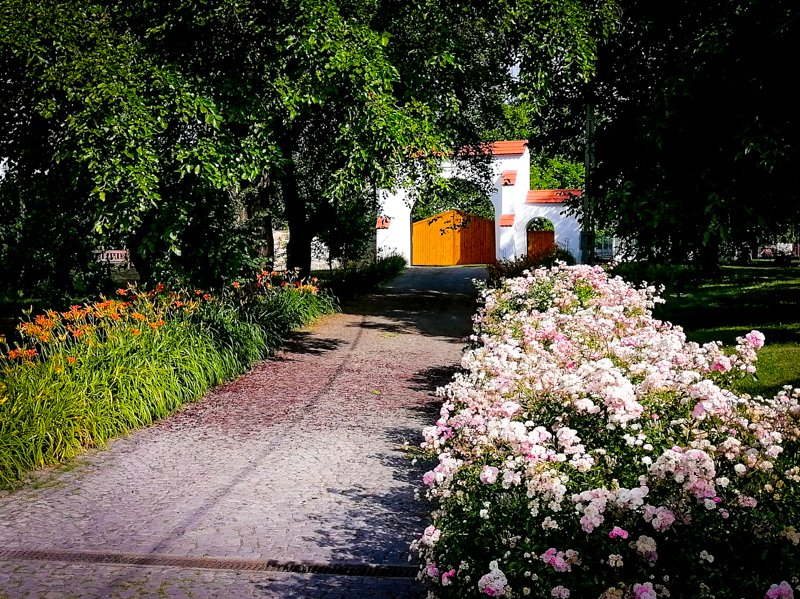
The walls surrounding the church, as well as the entrance tower, are an interesting combination of the walls around the churches in Covasna and Ciuc. Separated from the church, 19th. The baroque dome-shaped tower, built in the first half of the 20th century, can be considered a characteristic of Covasna county, and the choir walls with low portholes can be compared to those of the churches in Ciuc.
The Estelnic bell cast in 1567 is also mentioned by Balázs Orbán in his valuable work "Description of the Szeklerland". Another repair took place in 1635, when the sacristy was built, which is still there today. The basement wall was also probably built around 1635.
The Gothic vault of the sanctuary was not restored after the earthquake of 1802. In 1838, another earthquake struck the building. The damage was repaired in 1839. These two earthquakes and subsequent repairs significantly changed the external and internal appearance of the church.
The church, professionally restored in 1958, was again damaged by the natural disaster of 1977. Fragments of fresco were found under the fallen plaster. Only one figurative figure can be clearly distinguished: the blessed high priest.
They were unable to determine the age of the mural, which was drawn sketchily and with strong outlines and was created using a thin fresco technique.
The fragments from the 16th century. century, they are related to the paintings from Ghelnita and Valea Crisului. Another value of the church is the painted coffered ceiling, the work of József Szendrei from 1786.